
Theory of Change
Introducing our New Theory of Change
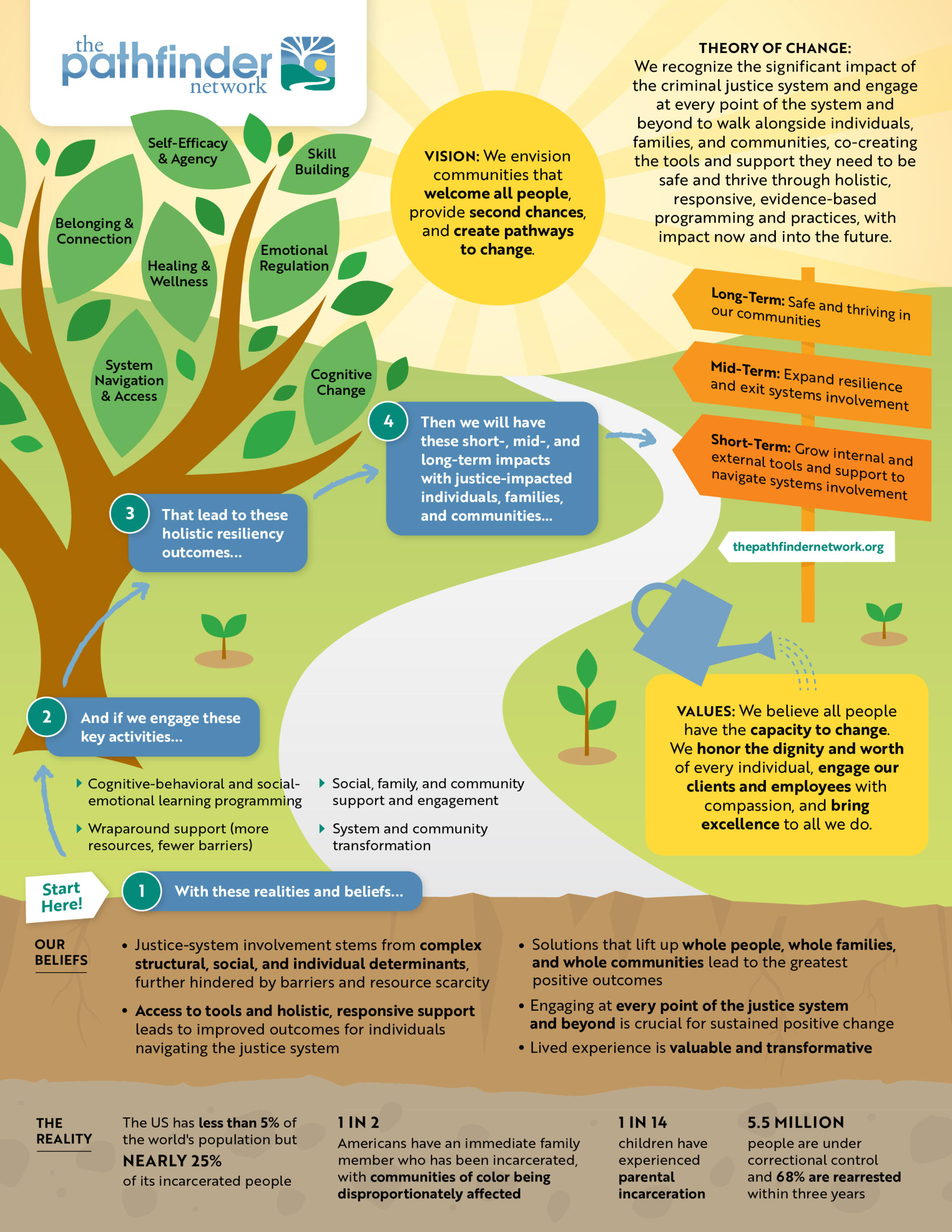
One in two households in the United States is impacted by the justice system. This stark reality demands a new path forward—one that transforms vision into action and hope into measurable change.
Through deep collaboration, we charted that path in 2025. Our new Theory of Change serves as a compass—honoring over three decades of walking alongside justice system-impacted individuals and families while pointing toward the horizon of what’s possible. It recognizes that when people receive holistic, responsive support—practical tools, resources, and connection—they build the foundation needed to heal, grow, and thrive.
Guided by our lived experience and strategic vision, PATHforward 2026, this theory illuminates the connections between what we do, why we do it, and the change it creates for whole people, whole families, and whole communities.
Our theory powerfully states:
We recognize the significant impact of the criminal justice system and engage at every point of the system and beyond to walk alongside individuals, families, and communities, co-creating the tools and support they need to be safe and thrive through holistic, responsive, evidence-based programming and practices, with impact now and into the future.
Our Theory of Change is both a compass and a promise: a commitment to walking alongside people, transforming systems, and creating pathways to change.
Grounded in evidence, rooted in lived experience, and guided by hope, our theory reflects who we are and who we are becoming: an organization that aligns every strategy, decision, and action with our north star—safe and thriving communities.

Our Vision and Impact
To understand how we translate our theory into measurable impact, explore our long-term strategy and our recent progress through the following links:
"Being a part of Pathfinders’ trauma group helped me in so many ways. It gave me a safe place to open up, heal, and learn tools to help me cope with emotions and daily life challenges. Setting healthy boundaries, recognizing triggers, and believing in myself are just a few things I learned." —Tanya B.