

Programming for Adults Who Are Incarcerated in Short-Term Custody Settings
The Pathfinder Network delivers evidence-based adult reentry and transition programs in Oregon jails and transition centers to promote positive change and increased resilience leading to successful transition from incarceration and exit from the justice system.
Through our Center for Family Success and Resilience & Recovery Project peer support program, we offer cognitive behavioral, parenting and family support, and peer support programming in jails and transition centers across the state.
Our programming offers the tools and skills needed to navigate incarceration and prepare for transition. We focus on enhancing strengths, confidence, support, and resilience, which are all directly linked to reduced recidivism and systems involvement.
We offer responsive options, including parenting skill programming, and gender specific programming.
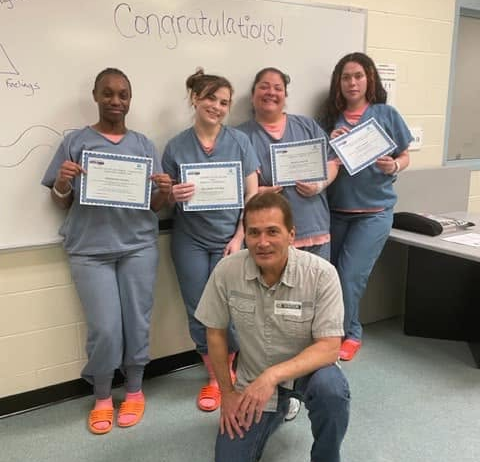
Transitions within and out of the justice system present significant barriers and challenges with accessing the support needed to be successful.
We provide opportunities for participants to build individual, social, and community resources that support their transition and beyond. We work together to reinforce successes and build self-efficacy, hope, and resilience that lead to better outcomes for individuals, their families, and our communities.
Cognitive-behavioral programs we offer include:
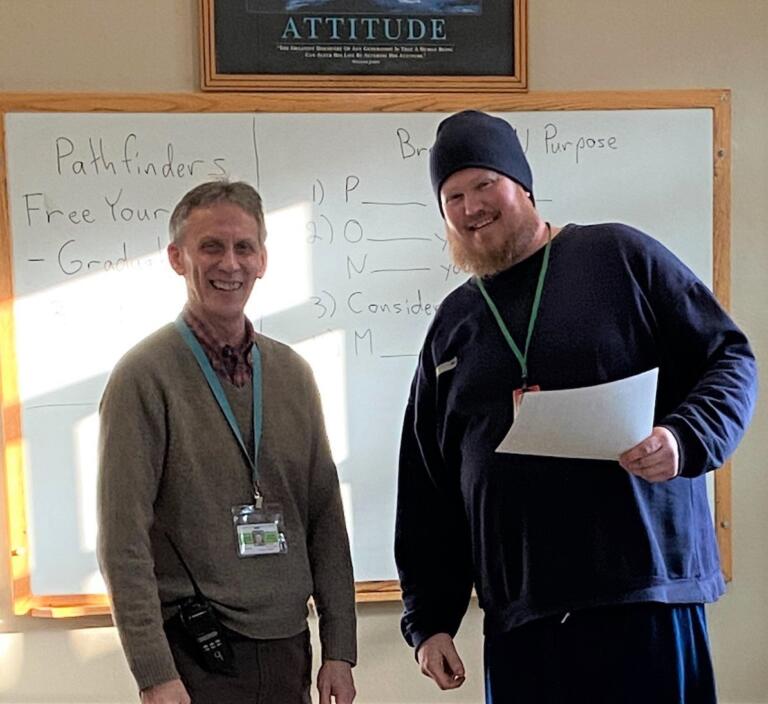
Free Your Mind in Transition
A cognitive-behavioral group that focuses on the necessary skills for those preparing to return to the community or who are currently on some form of supervision in the community. This group is skill-based and prioritizes the learning of cognitive restructuring, emotion regulation, and social skills in an engaging, practical and hands-on way through the following modules: Orientation, CORE, Anger, and Mental Toughness.
Parenting Inside Out (PIO-24 and PIO-48)
An evidence-based parenting skills program designed for justice system-impacted parents. In PIO, parents develop and refine social interactional skills and citizenship behaviors they can use in all aspects of their lives, and that will help them guide their children toward becoming positive, constructive adults. The program gives parents a way of navigating life that uses healthy, pro-social skills to interact with children, partners, co-parents, officials, friends, and family. PIO is offered in a 24-hour and 48-hour versions.
Healing Trauma for Women
A cognitive-behavioral trauma coping skills group for women involved in the criminal justice system. This program focuses on helping women understand trauma, its impact, and how to effectively cope with the impacts. Topics include: the process of trauma, power and abuse, grounding and self-soothing, and healthy relationships. This group is run in a closed format. Participants will walk away feeling more informed and equipped with more resiliency resources to support them on their journey to healing.
Building Resilience for Men
A cognitive-behavioral trauma coping skills group for men involved in the criminal justice system. This program was designed to address some of the issues specific to men’s trauma. Topics include understanding trauma and its process, trauma’s impact on the inner self (thoughts, feelings, beliefs) and on the outer self (behaviors and relationships), and coping and calming strategies. This class is run in a closed format. Participants will walk away feeling more informed and equipped with more resiliency resources to support them on their journey to healing.
Women in Recovery
An awareness-building group for women who are considering recovery from substance use. This program uses an evidence-based interactive journaling process to help women explore information about the impact of substance use on women’s health, families, and relationships. Participants will walk away with a greater sense of where they are and where they want to go.
Courage to Change – Substance Use
An awareness-building group for individuals who are considering recovery from substance use. This program uses an evidence-based interactive journaling process to help participants explore information about the impact of substance use, identify motivations for change, consider their strengths and abilities, recognize warning signs, and develop a plan for their next steps.
Getting Back on Track
An action planning group for individuals who have experienced a setback in their recovery. This program will help them get back on track and prepare to manage obstacles down the road. This group will support efforts towards maintaining recovery in the long term. Sessions include staying on track, getting back on track, and planning my next steps.
Maintaining my Recovery
A skill building group designed to learn effective strategies for maintaining recovery and working through obstacles before they arise. This group demonstrates how commitment to healthy and positive behaviors can be accomplished with focused and ongoing effort. Sessions include exploring recovery, strategies for maintaining recovery, creating a plan and next steps.
Free Your Mind Skill Building Workshop
A skill building workshop that is delivered in an open and rolling format designed to teach cognitive and social skills that participants can use every day to support them on their journeys. This group is skill-based and prioritizes the learning of cognitive restructuring, emotion regulation, and social skills in an engaging, practical, and hands-on way.
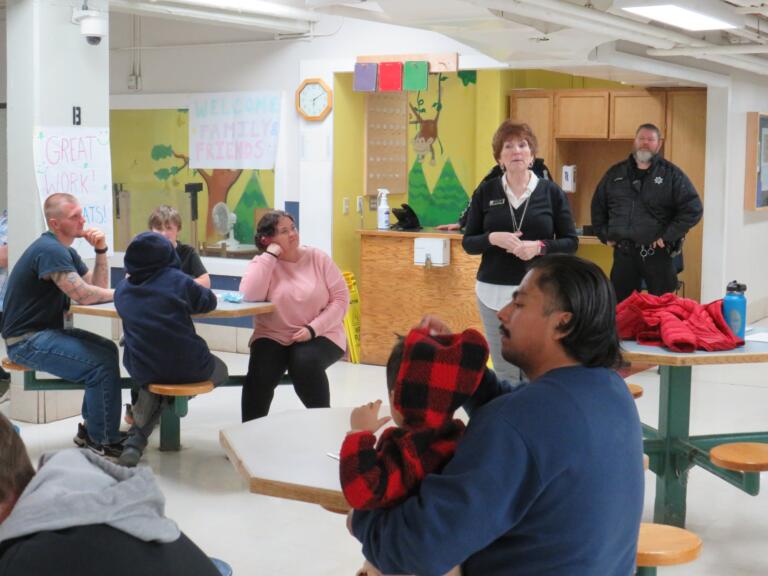
Individuals who are incarcerated in Oregon can call us toll-free at 833-269-8633 for more information, and/or contact their Correctional Counselor to learn more.
To learn more about our community-based peer support programs, visit our Peer Programs page.
To learn more about services at our Center for Family Success, visit our Family Programs page.
For all other inquiries, contact us using the button below.
Contact Us
To join the growing network of partners bringing Parenting Inside Out (PIO) to correctional facilities, substance use programs, family courts, and more, contact us at pio@thepathfindernetwork.org. Learn more about PIO at www.parentinginsideout.org.